

01 · Revenue
Gross, refunds, net — in shop money
One morning read. Confirmed when coverage is complete; thin stays thin. Net is never profit.
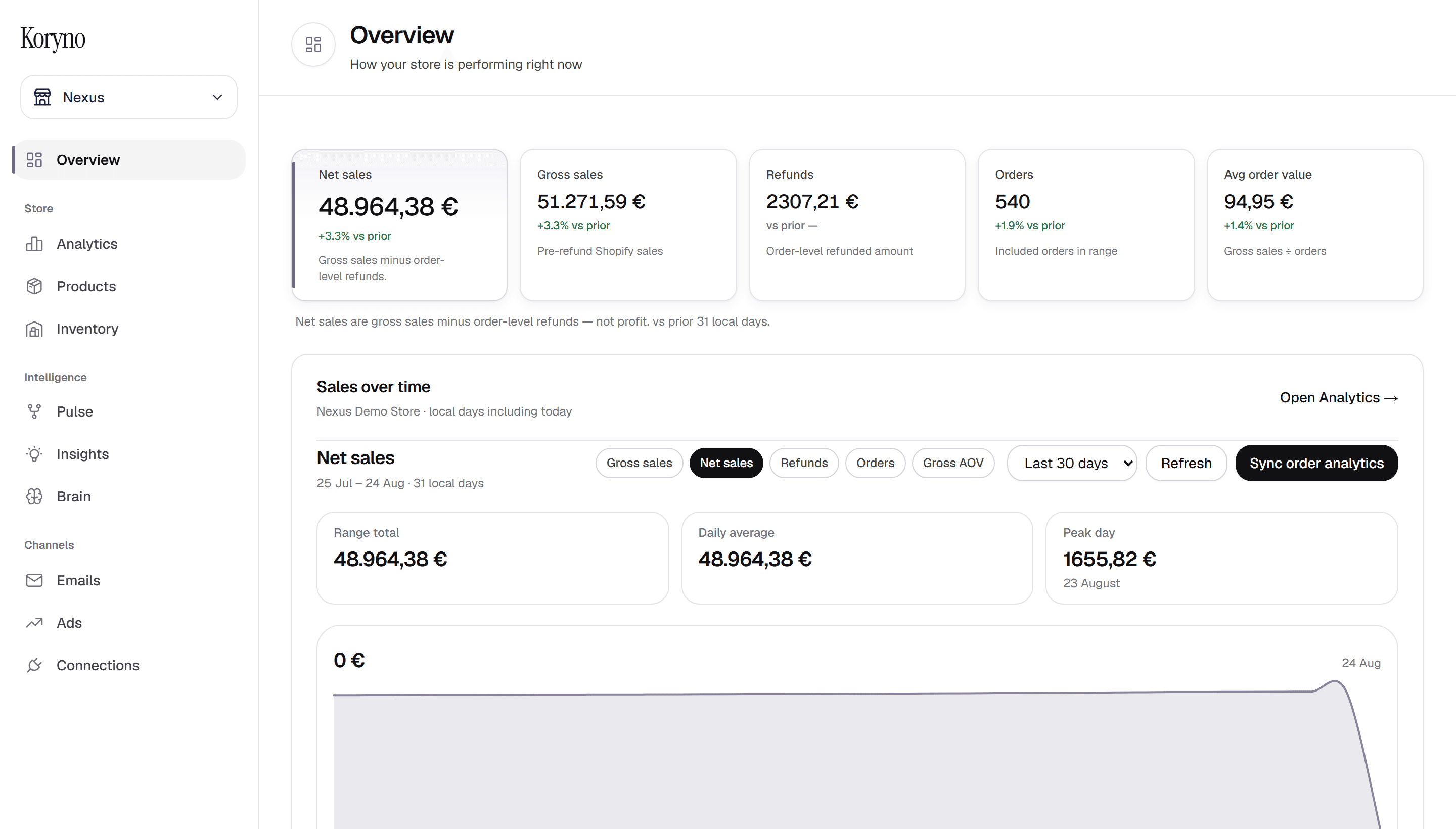
Example layout — not a customer store
Shopify, ads, and mail flow in. Nothing flows out. One next step, labeled confirmed, verifying, or insufficient.
Example layout — not a customer store
Integrations
Shopify, ads, mail, and payments — observe-only. Nothing writes back.





Read Shopify, ads, and business mail. Never write products, prices, inventory, or campaigns.
Connect once. Every morning, signals flow in — you still act in your own tools.

Every signal is confirmed, verifying, or insufficient. Thin data stays thin — no invented certainty.
Gross, refunds, and net in shop money. Net is never profit — the gap is refunds, not margin theater.
Time back at the desk. Real history, real integrations, real scopes — coverage declared, never invented.
Morning close
From open to labeled next step — not another hour lost to tab stitching.
Shopify backfill
Months of order history on first connect. Coverage declared from day one.
Launch integrations
Shopify, ads, mail, and payments — observe-only scopes, nothing writes back.
Hours in the build
Operator-led product work — not a generic dashboard with a Shopify logo.
The morning surface
What Koryno actually ships: net in shop money, cover days, and one next step with declared confidence. Example layout — not a customer store.
Last 7 local days · Observe only

The product
Not a carousel of demos — the screens you open in the morning. Observe-only. Declared confidence.
One morning read. Confirmed when coverage is complete; thin stays thin. Net is never profit.
Example layout — not a customer store
At-risk SKUs labeled for what is actually known. You still restock in Shopify.
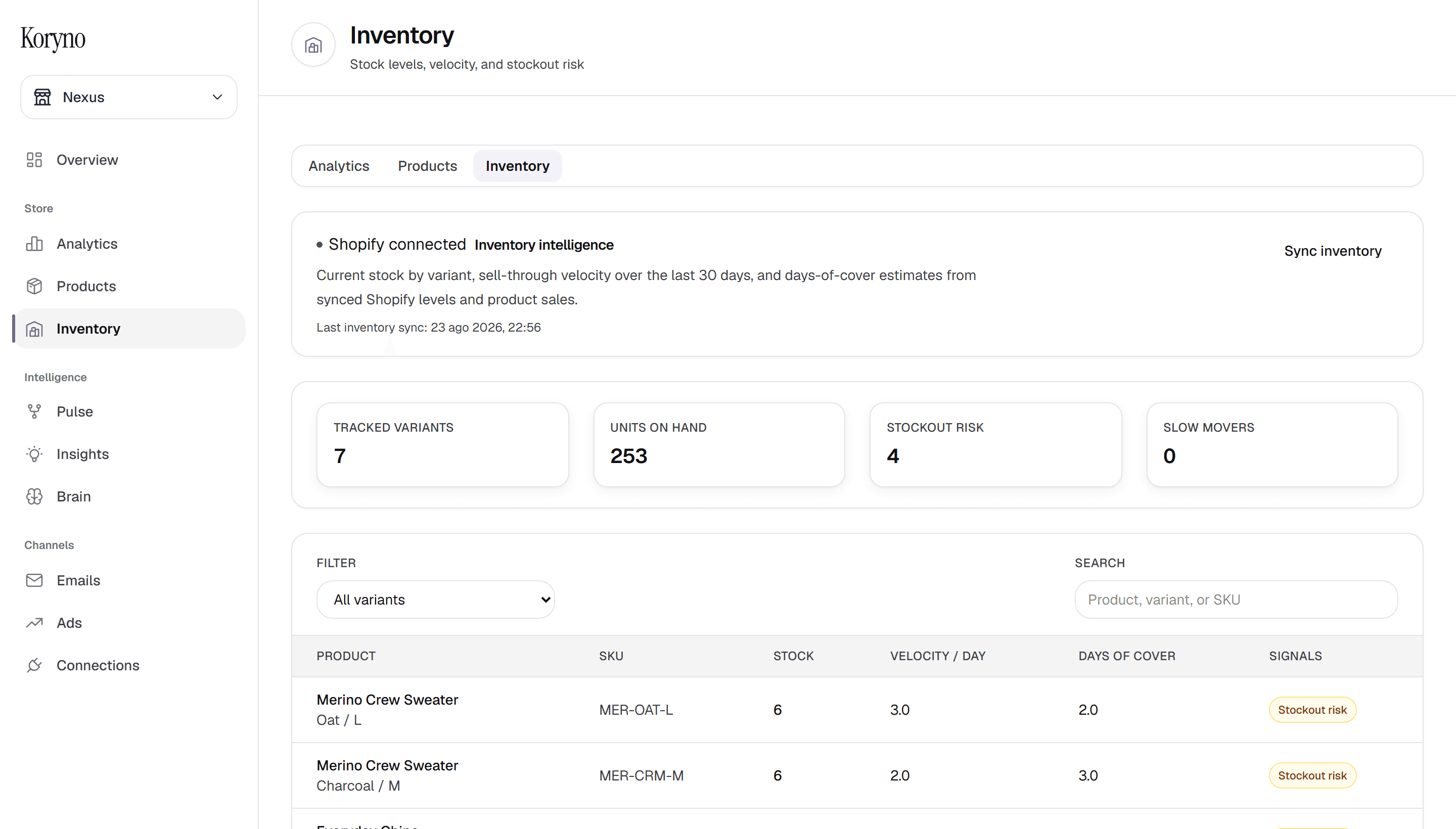
Example layout — not a customer store
Business mail next to the close. Koryno observes; you reply and act in your tools.
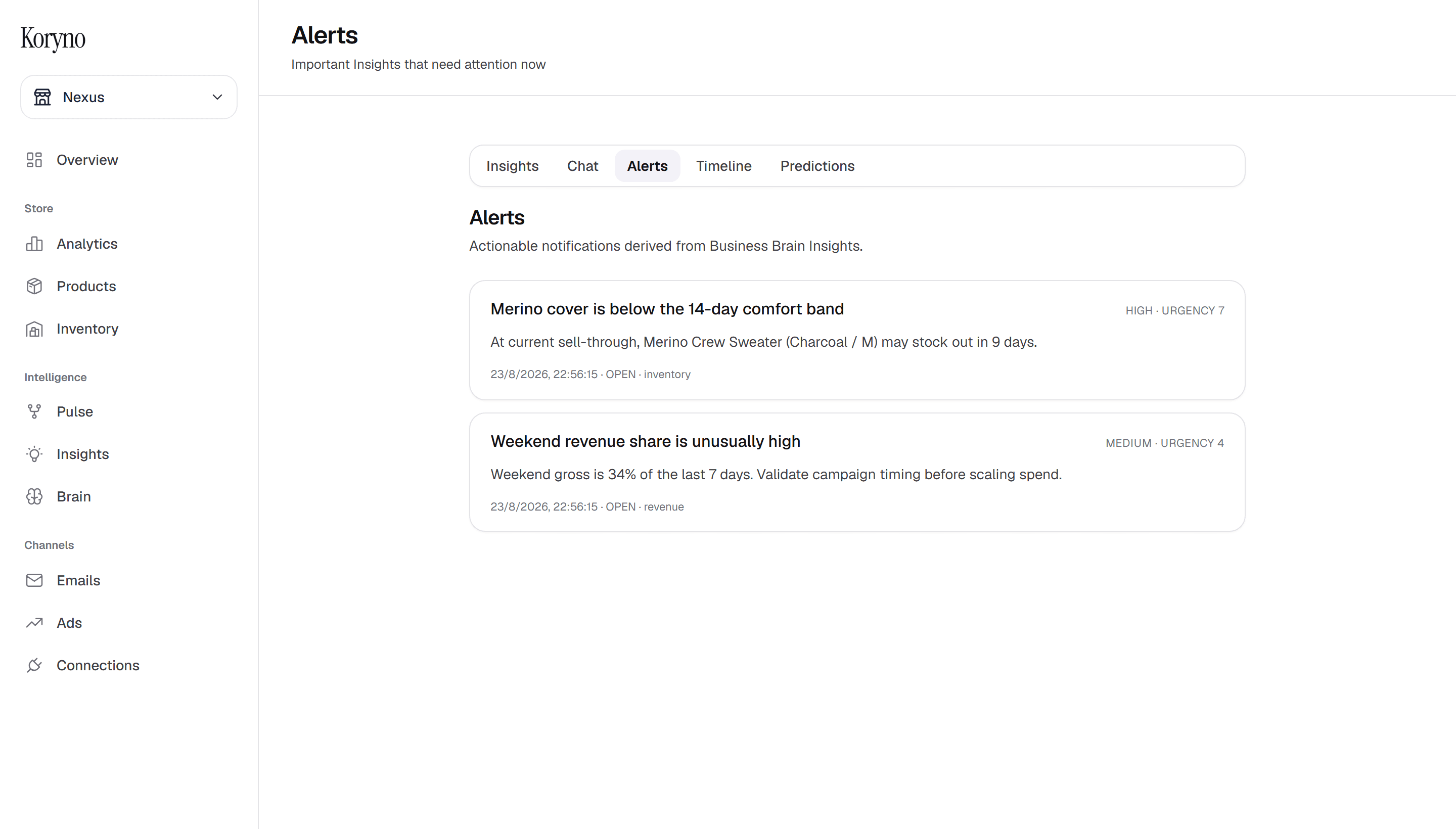
Example layout — not a customer store
How it works
Connect once. Observe every day. The last move is always yours.
01
Shopify first. Then ads and business mail. Observe-only scopes — no write access, ever.
02
One surface. Gross, refunds, net, cover, and mail — each labeled for what is actually known.
03
Restock in Shopify. Spend in ads. Reply in mail. Koryno never writes back to the store.
You still click this in Shopify.
Before you email
Short answers. Same rules as the product: no invented certainty.
Still unsure? Mail the store URL. We reply from the team inbox.